Blog · Cashless payments
NFC Contactless Payments at Live Events: How India's Biggest Festivals Are Going Cashless
Tap and pay in under one second, offline-first when the network drops, and every rupee logged, timestamped and reconciled. What the data from 6,000+ events across India shows.
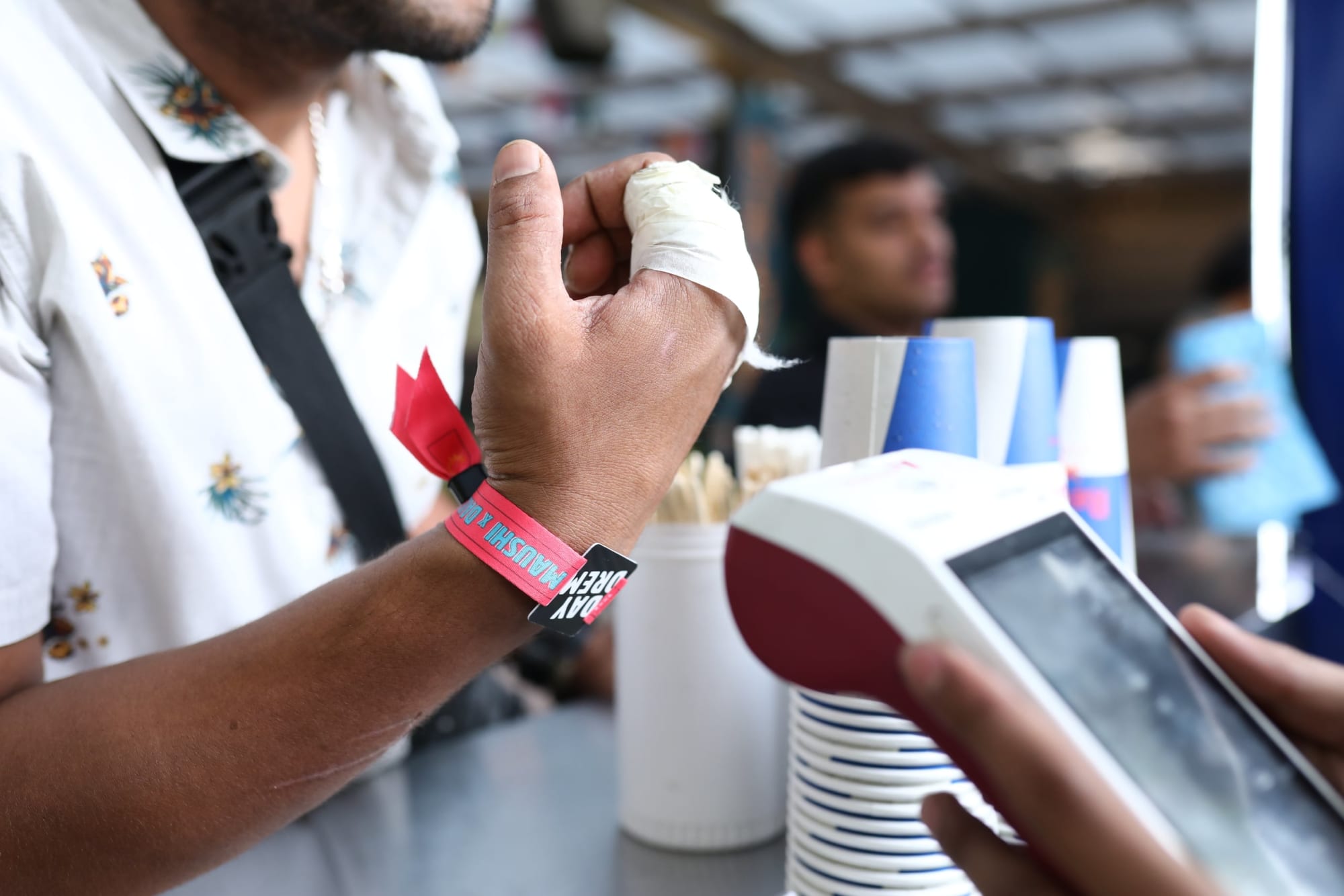
The moment the headliner takes the stage, every bar, food stall, and merchandise counter at a festival faces the same pressure: serve thousands of people fast, without errors, without cash handling, and without a reliable internet connection.
For India's biggest live events, the answer has been NFC contactless payments. Not as a novelty, but as the operational backbone that keeps revenue flowing, queues short, and event organisers in control.
Here's how it works, why it matters, and what the data from 6,000+ events across India tells us about where live event payments are heading.
What Are NFC Contactless Payments at Live Events?
NFC stands for Near Field Communication — the same technology behind tap-and-pay on your phone or bank card. At live events, NFC contactless payments work through wristbands, RFID cards, or keychains that attendees load with credit before or during the event — in effect, digital wallets they wear.
When an attendee taps their wristband at a bar or food stall, the transaction completes in under one second. No cash changes hands. No card reader needs a network connection. No receipt needs printing unless the vendor chooses it.
For event organisers, every single tap is logged instantly on a real-time dashboard — giving complete visibility into sales, inventory, and vendor performance while the event is live.
Why Cash Is No Longer Viable at Scale
At a festival with 50,000 attendees, cash creates four compounding problems that NFC contactless payments solve directly.
The first is speed. A cash transaction at a busy bar takes 30–45 seconds when you factor in counting, change, and verification. An NFC tap takes one second. At peak hours, that difference determines how many people get served and how much revenue a vendor generates.
The second is leakage. Cash at events is notoriously difficult to reconcile. Bartenders and vendors handle thousands of small transactions with no audit trail. RFID wristband and card systems eliminate this entirely — every rupee is logged, timestamped, and tied to a device ID.
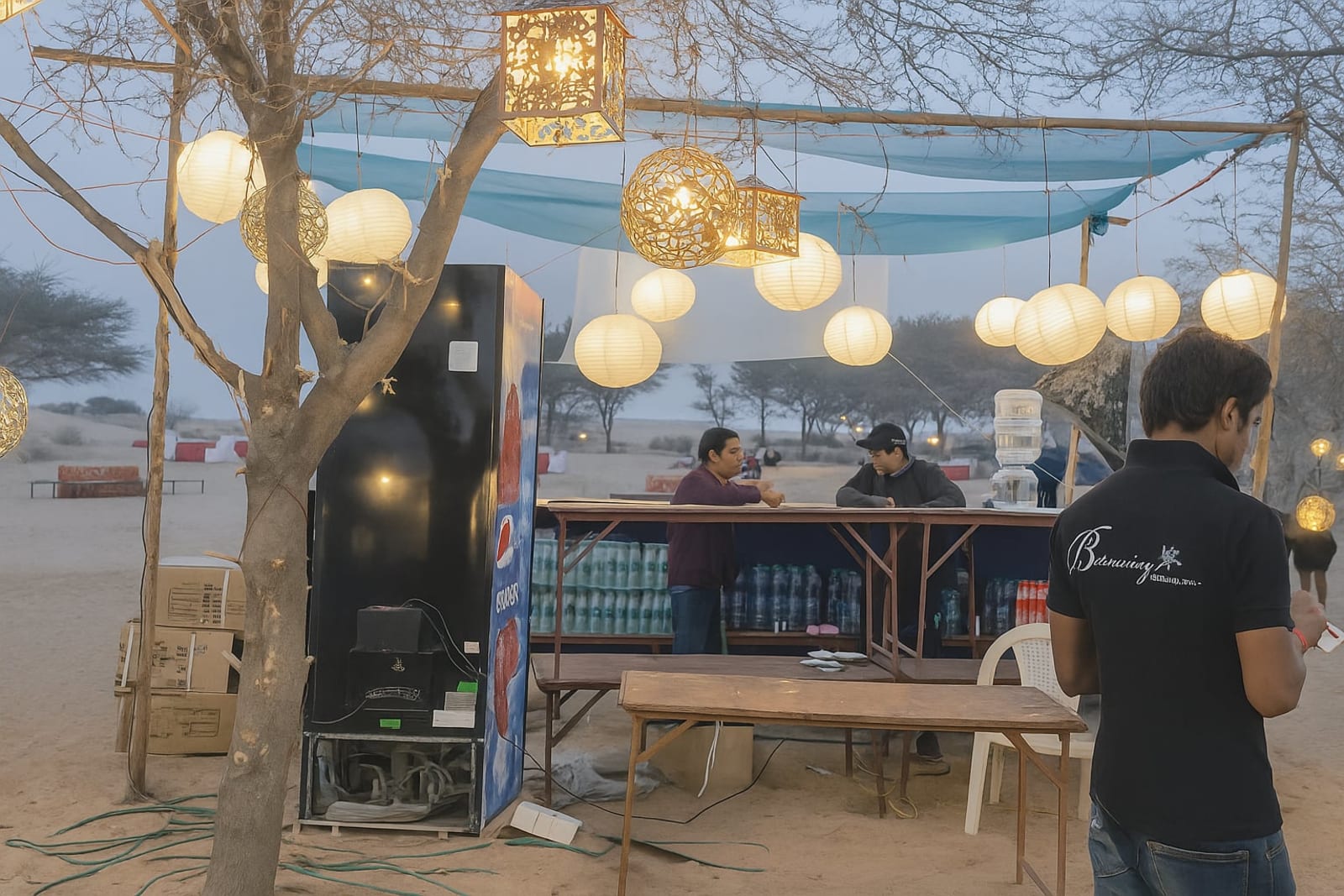
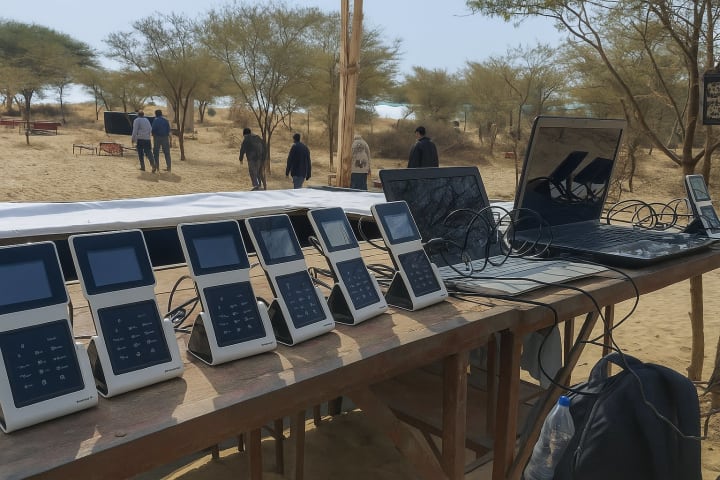
The third is connectivity. Outdoor festivals, heritage venues, and remote locations often have unreliable or zero mobile data coverage. NFC contactless payment systems built on offline-first architecture continue operating without any network connection — syncing data when connectivity returns.
The fourth is reconciliation. End-of-night cash counting is slow, error-prone, and a source of disputes between organisers and vendors. Digital payment systems generate instant, accurate settlement reports the moment the event closes.
How Access Control and Cashless Payments Work Together
The most efficient live event setups run NFC contactless payments and access control on the same wristband or RFID card.
At the gate, the same wristband that stores the attendee's payment balance also serves as their entry credential. The access control system validates the ticket in real time, logs the entry, and applies anti-passback logic to prevent re-entry misuse — all in under a second.
Inside the venue, the same tap-and-pay wristband works across every vendor stall, bar, and merchandise point. Zone-based access control manages VIP areas, artist zones, and backstage — all running off the same infrastructure layer. See how TapX puts entry and payment on one credential.
For event organisers, this means one system, one real-time dashboard, and one reconciliation report covering entry, payments, and vendor performance end to end.
What the Data from India's Largest Events Shows
AtomX has powered NFC contactless payments and access control across 6,000+ events in India, including music festivals, stadium concerts, sports events, food festivals, and large-format cultural gatherings.
Across these deployments
- 28%
- average uplift in revenue per attendee versus cash-only operations
- <1 sec
- transaction speed, dropping vendor queues at peak hours
- Zero
- transaction failures in venues with no mobile connectivity, on offline-first architecture
Real-time dashboards also allow organisers to identify stockouts, reassign staff, and adjust pricing during the event — not after.

BookMyShow's 2019 investment in AtomX was made specifically to enable this infrastructure across BookMyShow Live events — including Coldplay India, Lollapalooza India, Bandland, Sunburn, and Travis Scott. The rationale was straightforward: at stadium scale, the on-ground payment and access control system is as critical as the ticketing platform. Read the full BookMyShow case study.
Choosing an NFC Contactless Payment Partner for Your Event
Not all NFC contactless payment systems are built for the conditions live events actually create. When evaluating a partner, event organisers should look for five things:
- Offline-first architecture that operates without internet connectivity — not just a fallback mode, but a primary design principle
- Integrated access control so entry validation and payments run on the same system and dashboard
- Real-time reporting during the event, not just post-event exports
- Certified security — ISO 27001 and SOC 2 Type II certification ensures data integrity and payment compliance
- Proven scale across similar event types and footfall sizes, with verifiable results
The difference between a cashless payment vendor and a cashless payment infrastructure partner is what happens when things get difficult — when the network drops, when footfall spikes unexpectedly, when a vendor runs out of stock mid-show. Infrastructure built for those conditions is what separates a smooth event from an operational crisis — and it is the difference between buying event technology and choosing an events solution that holds under load.
See how AtomX has done it since 2012 in AtomX: A Brief History, or browse the full case studies.
Frequently Asked Questions
What is NFC contactless payment at events?
NFC contactless payment at events is a tap-and-pay system using wristbands, RFID cards, or keychains loaded with credit. Attendees tap to pay at vendor stalls, bars, and merchandise points — completing transactions in under one second without cash or a mobile connection.
How does access control work at live events?
Access control at live events uses NFC wristbands or QR codes to validate tickets at entry gates in real time. The system applies anti-passback logic to prevent duplicate entries, manages zone access for VIP and backstage areas, and logs crowd flow data live on an organiser dashboard.
What is an RFID wristband payment system?
An RFID wristband payment system is a cashless payment method where attendees load funds onto a wristband before or during an event. The wristband stores the balance and communicates via radio frequency (RFID) or near-field communication (NFC) with payment terminals at vendor stalls — completing transactions instantly without cash or internet.
Do NFC contactless payment systems work without internet?
Yes — the best NFC contactless payment systems for events are built on offline-first architecture, meaning they operate fully without a mobile or Wi-Fi connection. Transactions are stored locally and synced to the central dashboard when connectivity is restored. This is critical for outdoor festivals, heritage venues, and remote event locations.
What is the benefit of cashless payments for event organisers?
For event organisers, cashless NFC payments eliminate cash handling errors, reduce revenue leakage from vendor pilferage, speed up bar and food service, and provide real-time sales and inventory data during the event. Post-event reconciliation is automatic and audit-ready, removing the need for manual cash counting and vendor disputes.
How do I choose an access control system for a large event?
When choosing an access control system for a large event, look for real-time entry validation, anti-passback logic, multi-zone management (VIP, general, backstage), offline functionality, and integration with your cashless payment system. Certification to ISO 27001 and SOC 2 Type II standards ensures data security and operational compliance.
AtomX powers NFC contactless payments, access control, and real-time event operations for 6,000+ events across India.
Running an event and want to move beyond cash?
Talk to the AtomX team about cashless payments, access control, and real-time dashboards for your next event.
Last updated: July 2026